
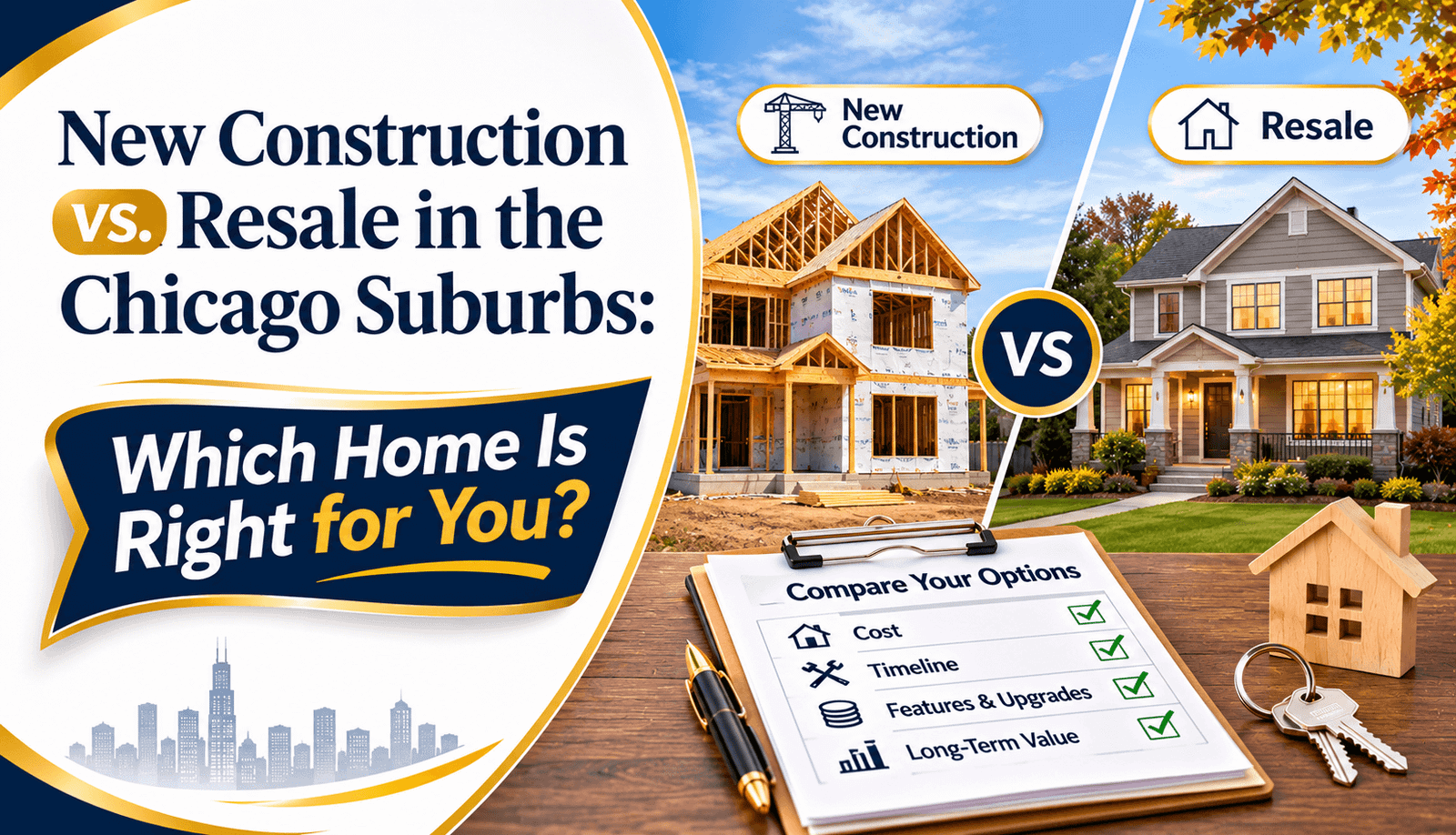
Buying a home in the Chicago suburbs comes with an important decision: should you choose a brand-new construction home or an existing resale property?
Both options offer advantages, but the right choice depends on your budget, lifestyle, preferred location, and long-term homeownership goals.
A newly built home may offer modern layouts, energy-efficient features, and fewer immediate maintenance concerns. Resale homes, meanwhile, may provide established neighborhoods, mature landscaping, and greater flexibility in location and pricing.
Whether you’re exploring Bartlett, Schaumburg, Elgin, South Elgin, Pingree Grove, Plainfield, or other Chicagoland suburbs, understanding these differences can help you make an informed decision.
In this guide, I’ll compare new construction vs. resale homes in the Chicago suburbs, including costs, maintenance, property taxes, inspections, and other important considerations.
1. Understanding New Construction and Resale Homes
New Construction Homes
A new construction home is a newly built residential property that has not previously been occupied.
Depending on the builder and construction stage, features may include:
- Modern, open-concept floor plans.
- Updated kitchens and bathrooms.
- Newly installed heating and cooling systems.
- Energy-efficient windows and insulation.
- Limited builder warranties.
- Customizable interior finishes.
However, move-in-ready properties may already have their features and finishes selected.
Resale Homes
A resale home is an existing residential property that has been previously owned or occupied.
Potential advantages include:
- Established neighborhoods and community amenities.
- Different architectural styles and layouts.
- Mature trees and landscaping.
- Potentially larger lots.
- Opportunities for renovation and personalization.
2. New Construction vs. Resale Homes: Quick Comparison
| Feature | New Construction | Resale Homes |
| Purchase price | May carry a premium, depending on the market | Varies by location, age, and condition |
| Maintenance | Often fewer immediate repairs | May require repairs or updates |
| Customization | Possible during certain building stages | Changes usually require renovations |
| Energy efficiency | Often includes newer efficiency features | Depends on age and improvements |
| Neighborhood | May be in a developing community | Often in an established community |
| Move-in timeline | Can vary based on construction | Often more predictable after contract |
| Warranties | Builder coverage may be available | Existing warranties may be limited |
| Landscaping | May require additional work | Often already established |
| Property taxes | Future assessments may differ from initial estimates | More tax history may be available |
Neither option is automatically better. I recommend evaluating how each property fits your priorities and overall budget.
3. Purchase Price: Looking Beyond the Listing Price
New construction homes can cost more than comparable resale properties because of updated materials, modern designs, and construction expenses.
However, some builders offer incentives that may make newly built homes more financially attractive.
Depending on the builder, these may include:
- Closing-cost assistance.
- Mortgage interest-rate buydowns.
- Design or upgrade credits.
- Discounts on selected completed homes.
These incentives are not guaranteed, and eligibility requirements may apply.
Resale properties may offer greater pricing flexibility depending on market conditions, property condition, and the seller’s circumstances. However, renovation expenses can quickly affect your budget.
My tip: Compare the total cost of ownership, including purchase price, financing, taxes, insurance, upgrades, and expected maintenance.
4. Maintenance and Repairs: Which Option Requires Less Work?
New Construction: Fewer Immediate Maintenance Concerns
Because major systems and building materials are new, buyers may experience fewer age-related repairs during the first few years.
These systems may include roofing, plumbing, electrical installations, heating and cooling, windows, insulation, and kitchen appliances.
Some builders also offer limited warranties covering specific materials, workmanship, or structural components.
However, warranty coverage varies, and new homes can still have defects or installation problems.
Resale Homes: Understand the Property’s Condition
An existing home may have older systems that require maintenance or replacement.
Before purchasing, review the condition of the roof, foundation, plumbing, electrical systems, and HVAC equipment.
A professional inspection can help identify concerns before closing.
Important: Even when purchasing a newly built home, consider an independent home inspection. New construction does not automatically mean defect-free construction.
5. Property Taxes: An Important Factor for Chicago Suburban Buyers
Property taxes can significantly affect monthly housing expenses in Illinois.
Whether you’re buying new construction or a resale home, understanding the property’s tax obligations is essential.
Property Taxes on New Construction Homes
One issue buyers sometimes overlook is that a newly constructed home’s initial property tax bill may not reflect the property’s completed value.
For example, a previous tax assessment may have been based primarily on the land before the house was completed.
Once the completed property is assessed, the tax bill may change.
Buyers should request a realistic estimate of future property taxes and discuss escrow calculations with their lender.
Property Taxes on Resale Homes
Existing homes typically have a more established property tax history.
However, this doesn’t mean future taxes will remain the same.
Reassessments, local government levies, exemptions, and other factors can affect the amount owed.
Property taxes can also differ across Cook, DuPage, and Kane counties.
6. Location and Neighborhood: Finding the Right Community
Buying New Construction in the Chicago Suburbs
New construction may be available in growing communities throughout Elgin, South Elgin, Pingree Grove, and Plainfield.
Depending on the development, buyers may find modern community amenities, contemporary home designs, newly planned residential streets, and multiple floor-plan options.
However, some developments may still have ongoing construction, unfinished landscaping, or amenities that are not yet completed.
Buying a Resale Home in an Established Neighborhood
Resale homes can offer opportunities in areas where vacant land for new developments is limited.
Buyers exploring Bartlett, Schaumburg, Hoffman Estates, or Arlington Heights may find established parks, mature landscaping, existing shopping and dining options, and a wider variety of home styles.
I recommend visiting the neighborhood and considering how the location fits your commute, lifestyle, and daily activities.
7. Energy Efficiency: Comparing Long-Term Savings
New construction homes are generally built to more recent energy-code requirements and may feature updated insulation, energy-efficient windows, modern HVAC systems, and improved air sealing.
However, actual savings depend on construction quality, property size, energy usage, and local utility rates.
Resale homes with upgraded windows, insulation, appliances, and heating systems may also offer good energy efficiency.
I recommend reviewing available utility information when comparing properties.
8. Customization: Making Your Home Your Own
Depending on the construction stage, builders may allow buyers to select flooring, cabinets, countertops, lighting, bathroom finishes, and certain layout upgrades.
However, customization can increase the final purchase price. Always confirm which features are included in the base price.
Resale homes offer personalization through renovations. Before planning major changes, obtain realistic contractor estimates and review applicable permit requirements.
9. Move-In Timeline: Which Home Can You Buy Faster?
A completed new construction home may be available relatively quickly, while a property still under construction could take several months or longer.
Weather, material availability, permits, and construction schedules may affect completion.
Resale homes may offer more predictable timelines because the property is already built. However, negotiations, financing, inspections, repairs, and title matters can affect closing.
If you have a firm moving deadline, I recommend confirming realistic completion or possession dates before making a decision.
10. Builder Warranties vs. Home Inspection Reports
Both new construction and resale purchases require careful evaluation.
For New Construction
Before signing a builder contract, ask for written details about:
- Warranty coverage and exclusions.
- Warranty claim procedures.
- Construction completion deadlines.
- Upgrade costs.
- Final walkthroughs.
- Outstanding repairs or finishing work.
Consider arranging independent inspections at appropriate construction stages, such as before drywall installation and before closing, where access is permitted.
For Resale Homes
Request available seller disclosures and review the findings of a professional home inspection.
Depending on the property’s age and condition, additional evaluations may be useful for:
- Radon.
- Sewer lines.
- Roofing.
- Foundation concerns.
- Electrical systems.
- Water intrusion.
The goal is not simply to find a beautiful home. It is to understand the property you’re purchasing and the responsibilities that come with ownership.
11. Which Option Is Better for First-Time Homebuyers?
New construction may be worth considering if you prefer modern layouts, newer mechanical systems, minimal immediate renovation work, and potential customization.
A resale home may be a better fit if you prefer an established neighborhood, a particular location, a wider variety of home styles, or a more predictable moving timeline.
Neither option guarantees higher appreciation or better long-term value.
I encourage first-time buyers to prioritize affordability, location, property condition, and long-term financial comfort rather than focusing solely on the age of the property.
12. My Homebuyer Checklist: What to Review Before Making an Offer
Before choosing between new construction and resale homes in the Chicago suburbs, I recommend using this checklist.
Financial Readiness
- Calculate your comfortable monthly mortgage payment.
- Review financing options and closing costs.
- Obtain realistic property tax estimates.
- Compare homeowners insurance costs.
- Budget for upgrades, repairs, and ongoing maintenance.
New Construction Checklist
- Confirm the base price and additional upgrade costs.
- Review builder incentives and eligibility requirements.
- Understand builder warranty coverage and exclusions.
- Arrange an independent home inspection.
- Confirm the estimated completion and possession dates.
- Review HOA fees, if applicable.
Resale Home Checklist
- Review available seller disclosures.
- Arrange a professional home inspection.
- Evaluate the age and condition of major systems.
- Obtain estimates for necessary repairs or renovations.
- Review available property tax records.
- Confirm the expected closing and possession dates.
Location and Lifestyle
- Evaluate commuting distances.
- Explore nearby amenities and transportation options.
- Consider your long-term space and lifestyle requirements.
I help buyers navigate real estate opportunities throughout Bartlett and the surrounding Chicagoland suburbs.
Frequently Asked Questions About New Construction vs. Resale Homes
Neither option is automatically better. New construction may offer modern layouts, newer systems, and limited builder warranties. Resale homes may provide established neighborhoods, different price points, and potentially more location choices. The best option depends on your budget, timeline, and priorities.
Not necessarily. Property taxes depend on assessed values, local tax rates, exemptions, and other factors. However, newly completed homes may initially have tax records that reflect only the land or an incomplete structure. Buyers should request an estimate based on the completed property.
Yes, an independent inspection is worth considering even for a brand-new home. Construction defects, installation issues, and unfinished work can occur. A qualified inspector can help identify potential concerns before closing.
Negotiation may be possible depending on the builder, market conditions, and stage of construction. Some builders may offer closing-cost assistance, upgrade credits, financing incentives, or price adjustments. Always confirm the terms in writing and compare the full costs.
Elgin, South Elgin, Pingree Grove, and Plainfield may offer new construction opportunities, while Bartlett, Schaumburg, Naperville, and Hoffman Estates may provide a variety of resale options.
Availability changes regularly, and I can help you compare current opportunities based on your budget and property preferences.
Working with a REALTOR® can help you understand local market conditions, compare builder offerings, review property options, and navigate the purchasing process. Builder sales representatives generally represent the builder’s interests, so buyers may benefit from having their own professional representation. Have an Illinois real estate attorney review contractual and legal matters.
Final Thoughts: Find a Home That Fits Your Future
Choosing between new construction and resale homes in the Chicago suburbs is about more than modern finishes or the home’s age.
It’s about finding a property that aligns with your finances, lifestyle, preferred location, and long-term plans.
Whether you’re interested in a newly built home in Plainfield or Pingree Grove or a resale property in Bartlett, Schaumburg, or nearby communities, I can help you explore available options and navigate the homebuying process.
Let’s discuss your goals, budget, and preferred locations so you can move forward with confidence.
DM me NEWBUILD on Instagram at @drashtipatel_realtor.
Contact Drashti Patel
Drashti Patel, REALTOR®
Real People Realty | Drashti Patel Homes
Phone: (715) 610-3788
Website: https://drashtipatelhomes.com/
Disclaimer: This article provides general real estate information and should not be considered financial, legal, or tax advice. Property prices, builder incentives, construction timelines, and market conditions are subject to change. Consult qualified professionals before making purchasing decisions.